
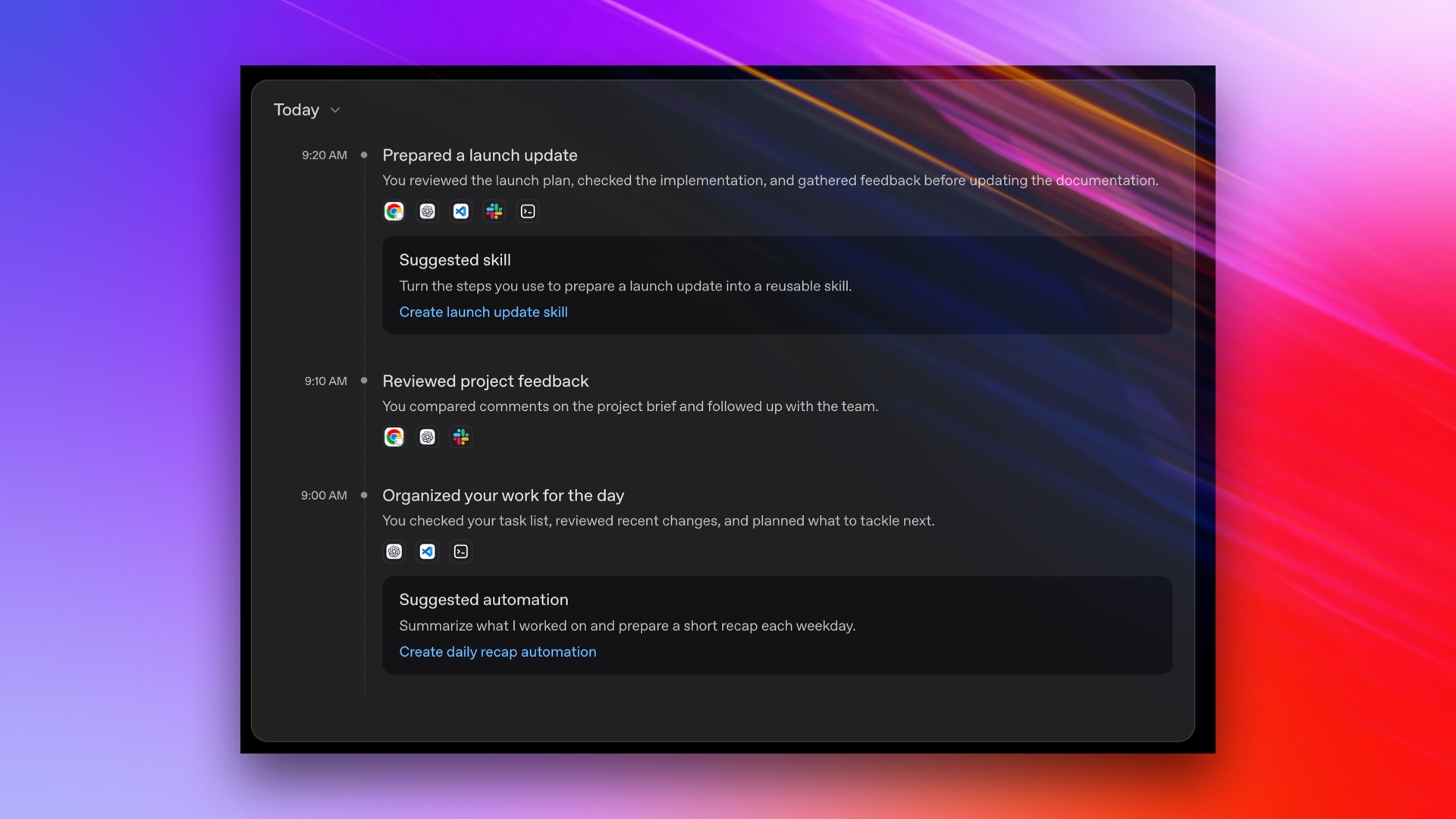

On August 14, 2026, OpenAI introduced a groundbreaking feature for its desktop ecosystem, allowing ChatGPT and Codex to leverage user activity on macOS to enrich context. Dubbed Computer History, this new capability tracks clicks, keystrokes, and application switches to help the artificial intelligence understand workflow patterns and automate repetitive tasks.
How Computer History Operates on macOS
Available initially for Pro, Business, and Enterprise plan subscribers, the tool replaces the earlier Chronicle research preview. Unlike controversial tools such as Microsoft Recall, Computer History does not record screens or capture audio. Instead, it utilizes the accessibility application programming interface in macOS to monitor interactions. Users retain full control, being able to pause tracking, select specific apps, and permanently delete data.
Privacy and Security Considerations
While summaries are synthesized in the cloud and stored locally on the system, OpenAI explicitly warns that the generated activity files are not encrypted by the feature itself. Consequently, other programs running under the same user profile might access them, though built-in disk encryption on macOS provides a baseline defense. Furthermore, the feature is currently unavailable in the European Economic Area, Switzerland, and the United Kingdom.
Future Outlook and Availability
Currently restricted to macOS, the integration requires manual opt-in through the application settings. Temporary memory files remain accessible for 48 hours, while daily summaries persist until manual deletion. OpenAI has not yet announced a timeline for a potential rollout to Windows or mobile platforms.