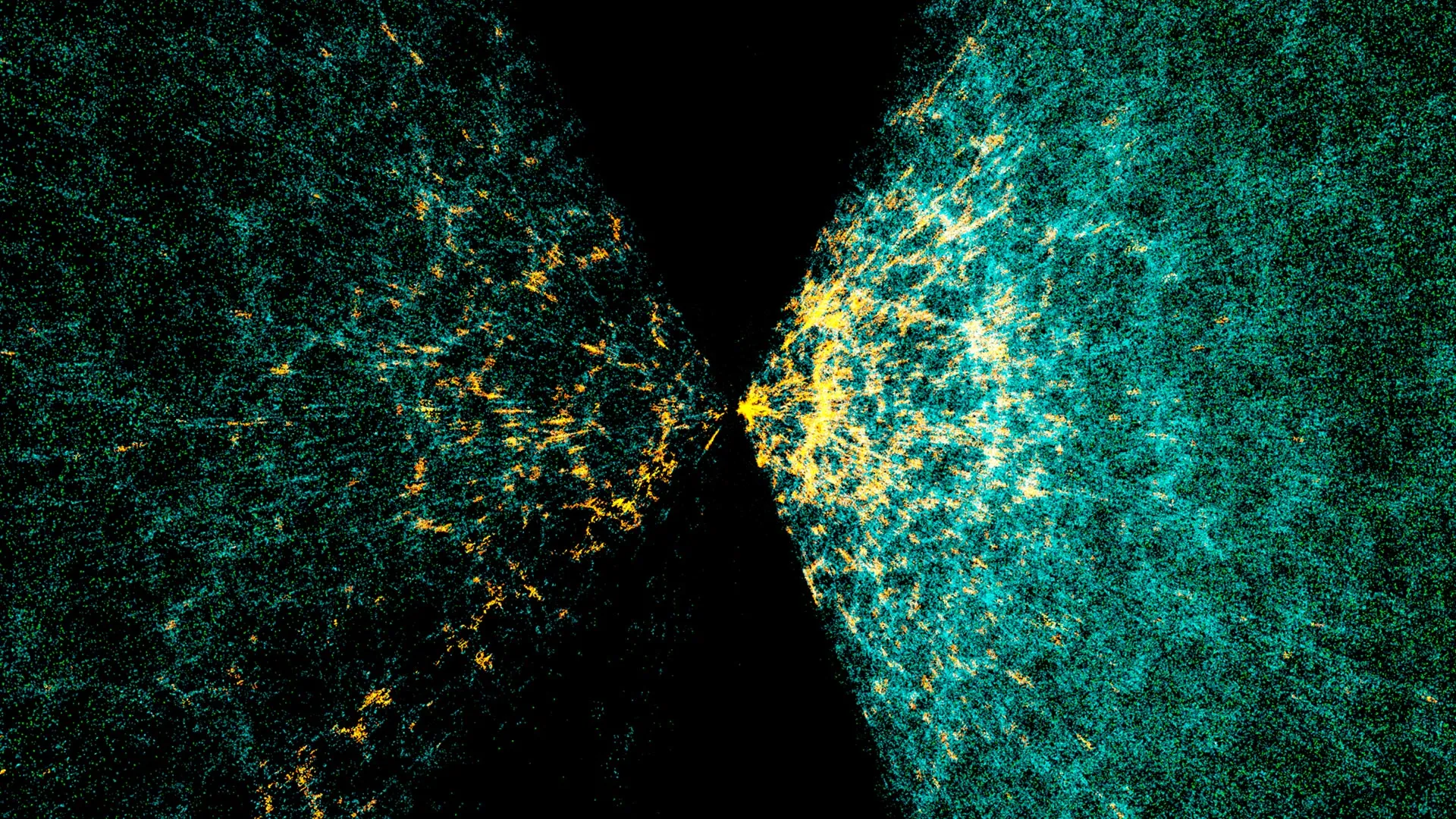

The Sloan Digital Sky Survey V (SDSS-V) has achieved a major milestone in modern astronomy by releasing Data Release 20 (DR20), a massive new cosmic map that unveils unprecedented details about black holes, rare stars, and hidden gas. Led by international collaborations and featuring the first optical spectra from the Southern Hemisphere, the release encompasses over 3 million spectra across 1.5 million stars, offering researchers an expansive view of the universe from both hemispheres.
Expanding Horizons with Southern Observations
Data Release 20 marks a critical turning point for the survey by integrating optical observations from the du Pont 2.5m Telescope at the Las Campanas Observatory in Chile with data from the Apache Point Observatory in New Mexico. According to Dr. Emily Griffith of the University of Colorado Boulder, the spokesperson for the SDSS-V collaboration, DR20 introduces over three million spectra and 18 value-added catalogs, representing years of rigorous work by an international team.
Unlocking Secrets of Black Holes and the Milky Way
The update dramatically expands the scope of key initiatives like the Black Hole Mapper and the Milky Way Mapper. By incorporating data from programs such as SPIDERS, AQMES, and Reverberation Mapping, the project now maps approximately 1.1 million optical BOSS spectra from roughly 500,000 distinct objects. Furthermore, it identifies rare celestial bodies, including the first carbon-enhanced metal-poor stars in the Magellanic Clouds and intermediate-mass stripped stars, shedding new light on stellar evolution.
Advanced Tools for Exploring Cosmic Gas
In addition to stellar and galactic catalogs, DR20 significantly expands the Local Volume Mapper (LVM) initiative, providing integral field spectroscopy maps across 169 tiles and roughly 300,000 spectra. To help researchers navigate these vast resources, the collaboration launched LVMvis, a browser-based visualization tool that complements updated interfaces like Zora and Valis. As noted by Dr. Juna Kollmeier of Carnegie Science, the director of SDSS-V, the team is already looking ahead to future releases, proving that humanity’s quest to map the cosmos is only accelerating.