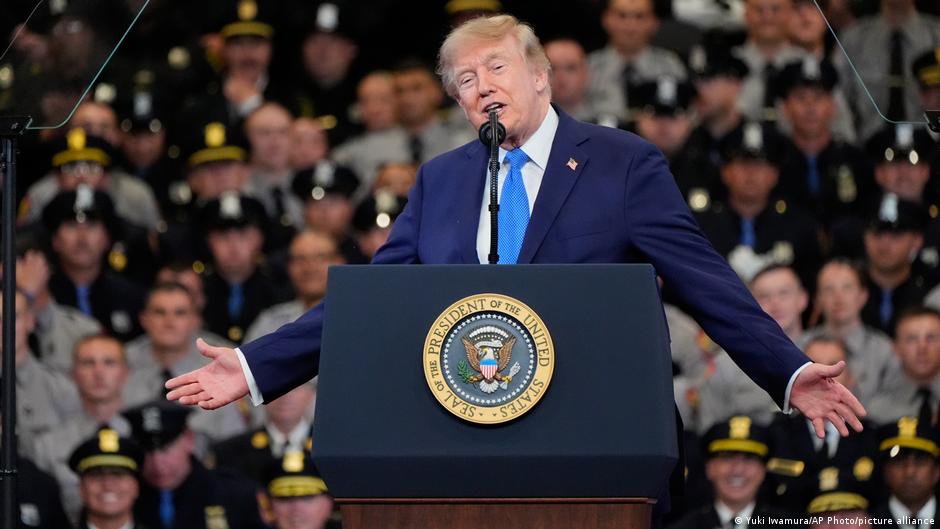

During a political rally in Garden City, New York, U.S. President Donald Trump announced on Friday that he plans to officially declare the Strait of Hormuz a territory of the United States once the ongoing war with Iran concludes. Speaking to supporters, Trump defended the ongoing U.S. naval blockade and urged American citizens to accept higher fuel prices as a necessary sacrifice to prevent Tehran from acquiring a nuclear weapon, amid a conflict that has now entered its sixth month.
Escalating Rhetoric and the U.S. Naval Blockade
The controversial remarks from Donald Trump came while he was touting the success of the American naval blockade enforced by the U.S. Navy in the vital Middle Eastern waterway. According to Trump, the blockade grants Washington total control over commercial traffic, asserting that no ships pass through the strategic chokepoint unless authorized. The corridor historically handles roughly one-fifth of the world’s seaborne oil and liquefied natural gas shipments. However, the closure has severely disrupted global energy supplies and driven up fuel costs worldwide since the joint U.S. and Israeli military campaign began on February 28.
Tehran’s Swift Rejection and Diplomatic Impasse
The Iranian government swiftly dismissed the American leader’s declarations. Kazem Gharibabadi, Iran’s Deputy Foreign Minister, stated on social media platform X that the strategic waterway cannot be seized by a speech, tweet, or aircraft carrier. Gharibabadi emphasized that Iran remains completely unintimidated by Washington’s threats and that the strait will stay strictly under Iranian authority. Peace negotiations remain at a complete stalemate after a preliminary understanding collapsed in July, leaving regional tensions higher than ever as the conflict approaches the autumn months.
Economic Fallout and Domestic Political Pressures
Addressing the economic domestic fallout, Donald Trump acknowledged that American consumers are facing elevated gasoline prices at the pump but argued that the economic pain is a worthy trade-off. The rising energy costs and economic pressures are expected to become major focal points during the upcoming November midterm elections. Meanwhile, the administration continues to defend military deployments in the region, including the lengthy deployment of the USS Abraham Lincoln aircraft carrier, dismissing reports of crew fatigue and mental health struggles among service members.