
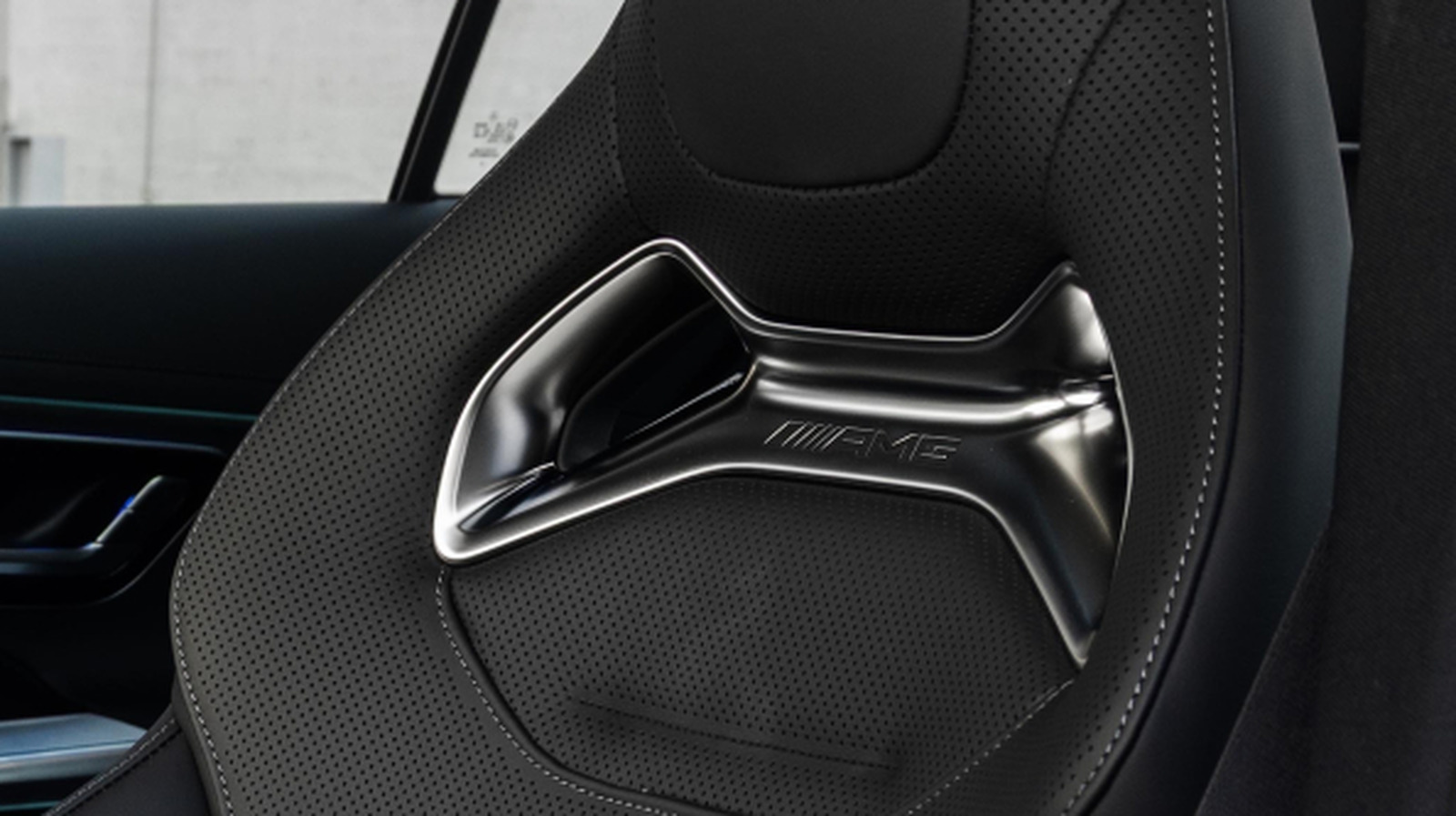

Two Mercedes-AMG owners, Gabriel Lahijani and Karendeep “Karina” Bath, have filed a class action lawsuit against the German automaker in the U.S. District Court of California’s Western Division. The plaintiffs allege that metallic AMG logos embedded in the front seats of certain vehicles heat up and cause thermal contact burns, leading to a legal battle over medical expenses and vehicle design defects.
Dangerous Design Defect Claims
According to court documents filed earlier in the week, the front seats of specific Mercedes-AMG models feature a metallic AMG logo positioned where it is reasonably expected to contact an occupant’s upper back, neck, or shoulder. The lawsuit characterizes this issue as a dangerous and undisclosed design defect. Plaintiffs are demanding that Mercedes compensate owners for medical expenses, pain and suffering, emotional distress, and cover the costs to have the logos removed from affected vehicles.
Incidents Involving Severe Burns
The first reported incident involved Gabriel Lahijani, a Los Angeles resident leasing a 2026 Mercedes-AMG E-Class. Lahijani sustained second-degree burns on his back on May 31 of this year after sitting in the vehicle while wearing a tank top. A board-certified dermatologist documented the injury, describing the skin mark as “AMG-inscribed.” Approximately a month and a half later, Karendeep “Karina” Bath of Chatsworth, California, experienced a similar burning sensation and injury after sitting in the driver’s seat of her vehicle in Los Angeles while wearing a sleeveless top, resulting in a visible thermal contact burn shaped like the logo.
Preventative Measures for Owners
Legal analysts and automotive experts note that the metallic badges absorb heat when exposed to direct sunlight, similar to traditional metal shift knobs found in manual transmission vehicles. Until a formal recall or manufacturer solution is issued, owners of affected Mercedes-AMG vehicles are advised to keep their front seats out of direct sunlight to prevent the metal emblems from reaching hazardous temperatures.