
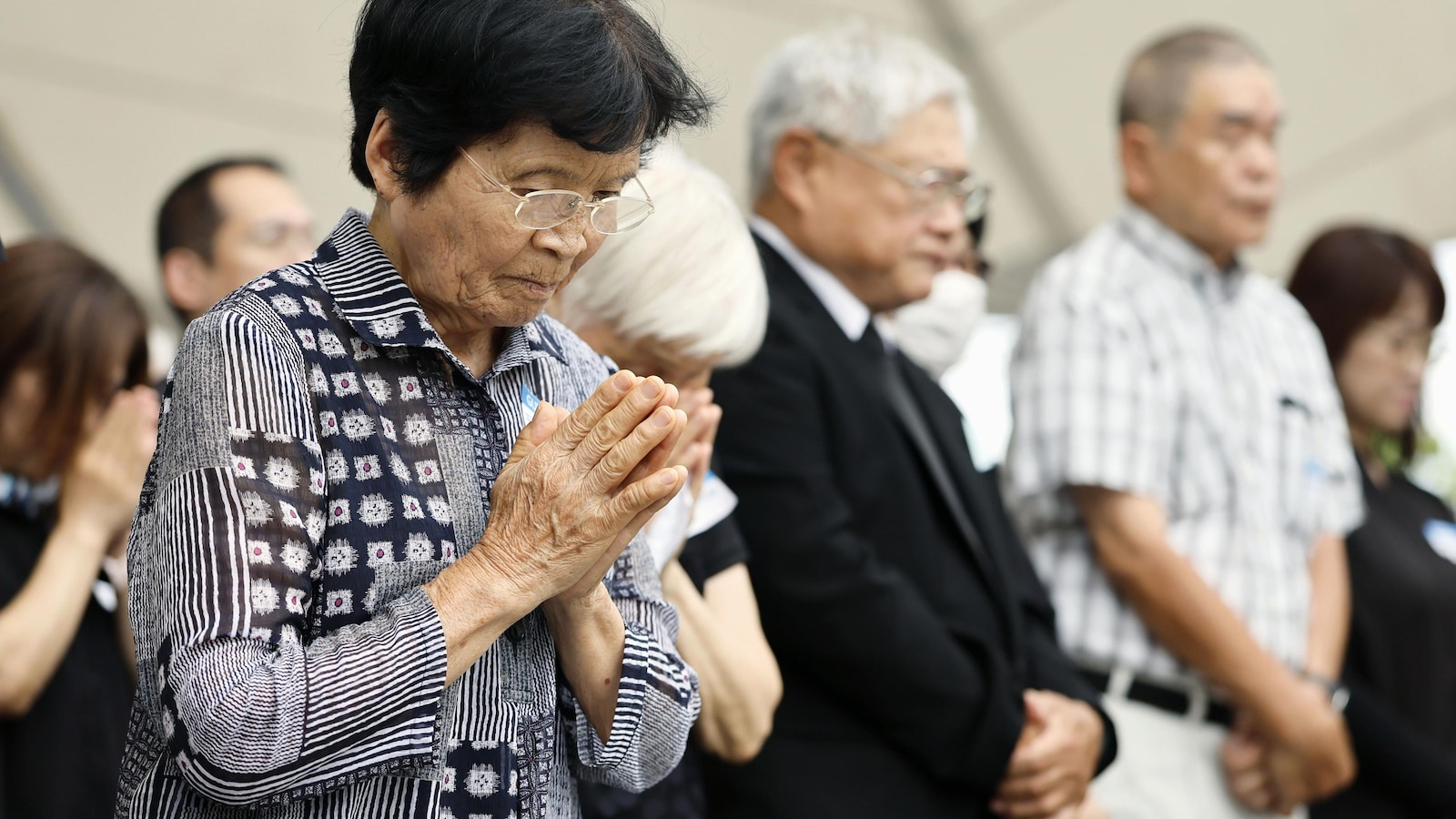

On Sunday, the southwestern Japanese city of Nagasaki marked the 81st anniversary of the U.S. atomic bombing, with Mayor Shiro Suzuki denouncing nuclear deterrence as an "absolute evil" and urging the national government to strictly adhere to its postwar non-nuclear principles. Representatives from more than 90 countries gathered at the Peace Park for the solemn ceremony, observing a moment of silence at 11:02 a.m. to remember the victims of the 1945 tragedy.
Mayor Warns Against Nuclear Deterrence Risks
During the memorial service, Mayor Shiro Suzuki criticized the growing international reliance on nuclear defense strategies. He argued that while certain nations believe possessing nuclear armaments deters potential aggressors, the historical destruction of Hiroshima and Nagasaki proves that humanity can cross catastrophic lines. Suzuki stated that nuclear weapons are not a "necessary evil" but an "absolute evil," explicitly warning leaders of nuclear-armed states that increasing reliance on deterrence heightens the risk of global nuclear war.
Political Tensions and Defense Policy Revisions
The anniversary coincides with Prime Minister Sanae Takaichi’s administration revising the country's defense policy to bolster military offensive capabilities. Growing speculation surrounds whether Takaichi, who supports nuclear dissuasion, might permit nuclear weapons to enter the country, potentially violating Japan’s third non-nuclear principle. While Takaichi attended Sunday’s ceremony and reiterated her administration's commitment to a realistic approach toward a nuclear-free world, she remained ambiguous regarding the three non-nuclear principles and did not mention the Treaty on the Prohibition of Nuclear Weapons, which Tokyo has refused to sign due to the U.S. nuclear umbrella.
Survivors Express Frustration and Concern
The dwindling community of survivors, known as hibakusha, have voiced deep frustration over the government's stance on nuclear deterrence. Protests have emerged in both Hiroshima and Nagasaki regarding potential relaxations of non-nuclear policies. Official figures indicate that the number of surviving victims has dropped to 91,105—representing about a quarter of the original count—with an average age exceeding 86 years old, raising urgent concerns about preserving the historical memory of the World War II bombings.