
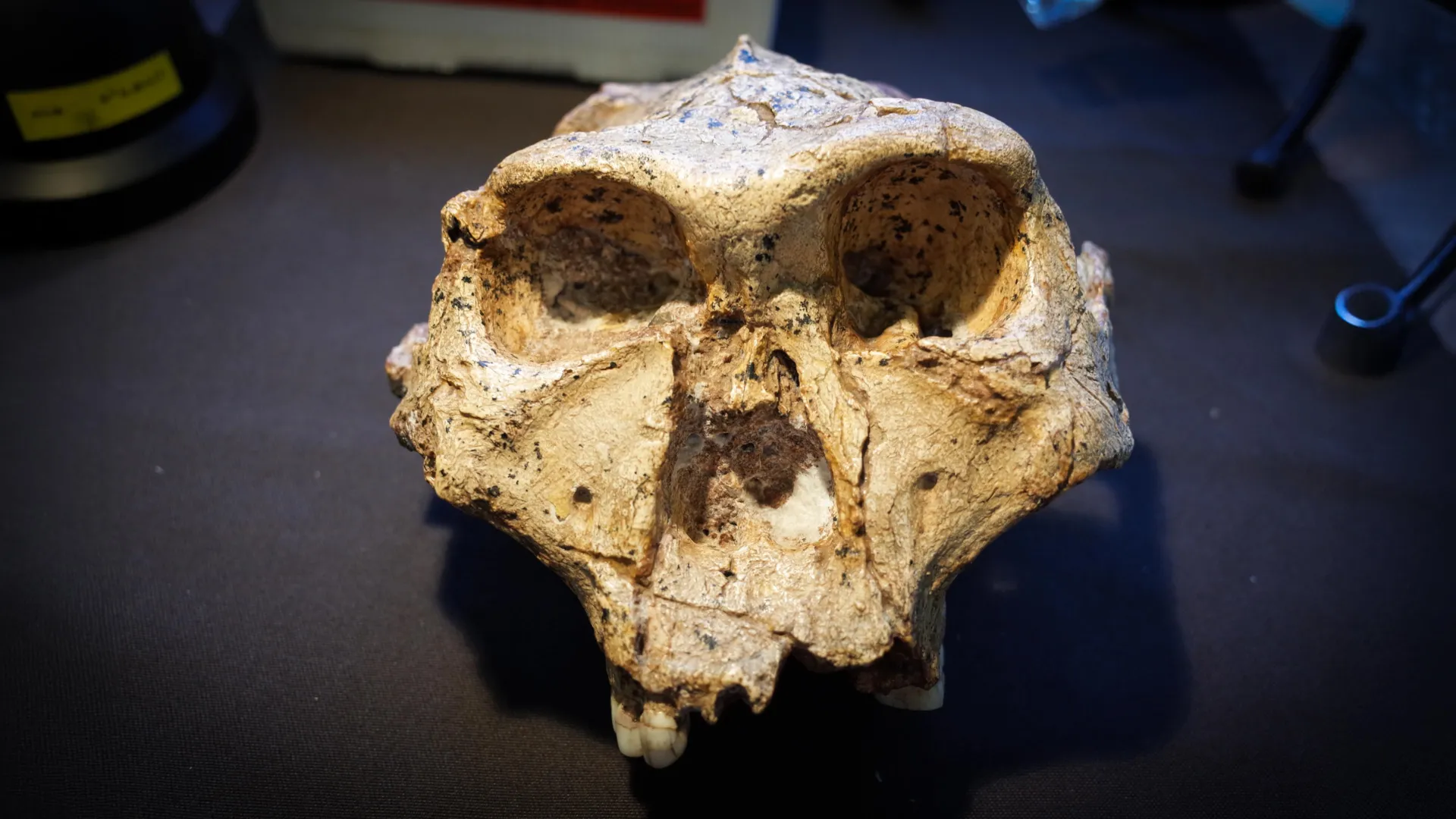

Humanity’s evolutionary history is far more tangled and complex than the neat, linear progressions traditionally depicted in textbooks. A groundbreaking study recently published in the American Journal of Biological Anthropology argues that our traditional taxonomy is severely outdated. Researchers are calling for a radical restructuring that would place all human species and closely related fossil relatives from the past 4-5 million years within a single expanded genus: Homo.
The Collapse of Traditional Boundaries in Human Taxonomy
For decades, human evolution has been taught as a straightforward sequence starting from ape-like ancestors, moving through Australopithecus and early members of Homo, and finally culminating in modern Homo Sapiens. However, an influx of newly discovered fossils and revolutionary advancements in genetic analysis have completely shattered this simplistic narrative. Traditional markers used to separate humans from their ancient relatives are no longer holding up under rigorous scientific scrutiny.
Lead researcher Dr. Ian Towle, a Research Fellow at the Monash Biomedicine Discovery Institute, emphasizes that current classification systems are losing their scientific utility. ‘Recent fossil discoveries and advances in evolutionary and genetic analysis make this an ideal time to reconsider whether our traditional taxonomy still accurately reflects human evolution,’ Dr. Towle stated. He points out that groups like Australopithecus and Paranthropus do not represent distinct evolutionary branches or clades, making traditional distinctions increasingly untenable.
Redefining Clades and Overturning Decades of Assumptions
In modern biology, a true genus should ideally represent a ‘clade’—a common ancestor alongside every single one of its descendants. Yet, large-scale evolutionary analyses consistently show that genera like Australopithecus—which notably includes the famous ‘Lucy’ skeleton—were originally defined by superficial traits like appearance and lifestyle rather than genuine shared ancestry. Furthermore, defining traits once attributed exclusively to the genus Homo, such as large brains, advanced tool use, and permanent bipedalism, have been thoroughly challenged by finds like Homo naledi and Homo floresiensis, the latter widely known as the ‘hobbit’ species.
These enigmatic species blur the lines by pairing small brains and primitive features with characteristics typical of advanced human lineages. ‘I propose expanding Homo to include these other groups to provide a more accurate and stable way to represent the complex evolutionary relationships revealed by the growing fossil record,’ Dr. Towle explained. By integrating Australopithecus and Paranthropus into an expanded Homo genus, scientists hope to build a more resilient framework that can gracefully accommodate future fossil discoveries without requiring constant reclassification.