
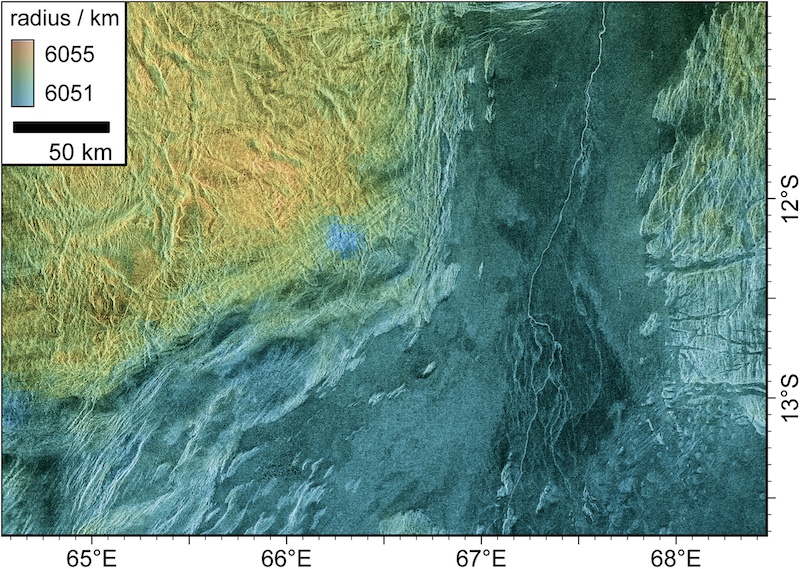

A groundbreaking new study suggests that sprawling polygonal cracks across the surface of Venus may have once formed in ancient seafloor mud, sparking fresh debates about a potential watery past on Earth’s scorching planetary neighbor. Published in Earth and Planetary Science Letters on July 29, 2026, the research was led by a team from the University of London and Imperial College, spearheaded by scientist Richard Ghail.
Unraveling the Mystery of Venusian Cracks
Today, Venus is notoriously inhospitable, boasting a runaway greenhouse effect driven by a thick, cloud-covered atmosphere that pushes surface temperatures to an average of roughly 464°C (867°F)—hot enough to melt lead. However, much of its surface is covered in mysterious networks of fractures. Long thought to be the result of cooling volcanic rock, a team of researchers has presented an alternative and more exciting theory in a paper titled The Lost Oceans of Venus.
The scientists focused on low-lying plains where the ground is fractured into distinct polygon shapes, each measuring roughly 1 to 2 kilometers (0.6 to 1.2 miles) across. By classifying these fields into six distinct types, the team argued that the patterns bear a striking resemblance to dried-out seafloor mud on Earth, where thick layers of waterlogged clay are buried, compacted, and squeezed dry over time.
Parallels to Earth’s Messinian Salinity Crisis
To support their hypothesis, the researchers drew comparisons to terrestrial events, such as the drying up of the Mediterranean Sea nearly 6 million years ago during the Messinian salinity crisis. That event left behind thick salt deposits and cracked terrain akin to what is observed on our neighboring world. Furthermore, long winding channels known as canali and wrinkled lowlands resembling salt deposits add further weight to the possibility of ancient oceans.
The Debate Continues
While the findings offer a compelling scenario for a watery past, they do not yet constitute definitive proof. Skeptics remain cautious, and confirming the existence of long-lost Venusian oceans will likely require future space missions capable of studying the planet’s surface and atmosphere in unprecedented detail.